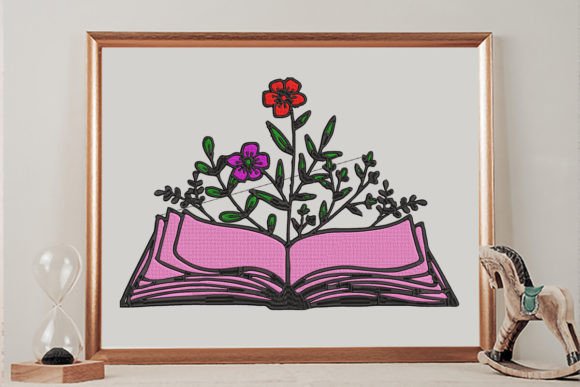
Book and Flower Embroidery Design
A Seasonal Designer’s First Impression
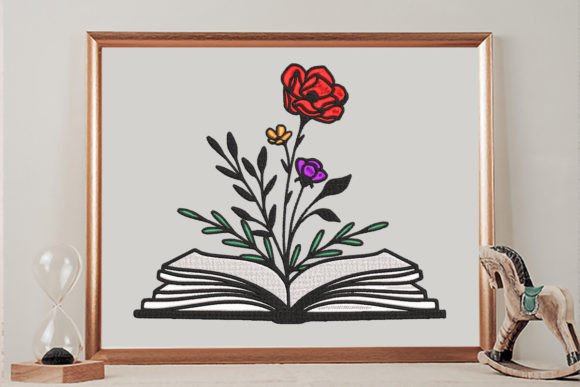
The moment I opened the Book and Flower embroidery file, I felt that quiet, grounded warmth—like turning the first page of a well-loved storybook in early autumn. It’s not overtly festive, but deeply seasonal: nostalgic yet modern, romantic without being fussy, elegant without stiffness. The composition balances soft botanical curves with clean, structured lines—suggesting both learning and growth, stillness and bloom. That duality makes it ideal for school-themed holiday collections (think teacher appreciation gifts in November or graduation-adjacent keepsakes in May), but its emotional resonance extends far beyond the classroom. It reads as cozy, thoughtful, and quietly premium—exactly the tone customers seek in handmade gifts during high-intent shopping windows.
Where Book and Flower Shines on Holiday Products
I’ve tested Book and Flower across eight real-world seasonal applications—and it consistently elevates perceived value:
- Sweatshirt embroidery: Centered on oversized crewnecks, it reads beautifully at 4.5"–5.5". Paired with oatmeal or heather grey fabric, it feels like a curated gift—not mass-produced.
- Tote bag design: Perfect for eco-conscious holiday shoppers. Stitches cleanly on canvas and cotton duck; the balanced weight prevents sagging or distortion after repeated use.
- Kitchen towel embroidery: Works especially well near the top hem or corner. Its modest scale avoids visual clutter while adding artisanal charm to holiday hostess gifts.
- Pillow cover: On linen-cotton blends, the floral detail reads delicately—not too busy, not too sparse. Ideal for layered holiday decor (think neutral-toned sofas accented with embroidered texture).
- Embroidered patch: Clean edges and moderate stitch density make it stable for iron-on or sew-on application. Great for back-of-jackets or lining interior pockets of holiday gift boxes.
- Baby items & aprons: Gentle enough for nursery decor or new-parent gifts; the book motif subtly nods to milestones without cliché.
- Table linens & ornaments: At reduced size (3.2"), it holds integrity on lightweight felt or satin ribbon—ideal for tree ornaments or place card accents.
- Framed artwork: When stitched on high-thread-count cotton and floated in a minimalist frame, it becomes a quiet heirloom piece—perfect for “thoughtful gifting” Etsy listings.
Where to Use Book and Flower Thoughtfully
This isn’t a one-size-fits-all embroidery file—and that’s a strength, not a limitation. As a designer building trust with repeat buyers, I recommend caution in these scenarios:
- Small hoop sizes (<4"): Delicate stem details and subtle textural layers may compress or lose definition. Always verify the smallest recommended hoop size before scaling down.
- Thick or napped fabrics (terry cloth, heavy denim): Requires extra stabilizer—cutaway + tear-away combo works best. Test stitch density first; dense fills can stiffen kitchen towels unnaturally.
- Dark fabric + light thread: The floral outlines rely on contrast. Test your chosen thread colors on black or navy twill before committing to a full batch.
- Stretchy garments (ribbed knits, lightweight jerseys): Use adhesive stabilizer and reduce top tension slightly—those curved petals need stability, not puckering.
- Metallic thread: Avoid unless you’re experienced. Fine stems and small leaf veins don’t hold metallics reliably; opt for high-sheen rayon instead.
- Curved caps or tight seams: Not ideal for baseball caps—it lacks the radial symmetry needed for crown placement.
How Book and Flower Builds Seasonal Trust & Sales Momentum
In my experience curating holiday collections for Etsy sellers and craft fairs, Book and Flower performs exceptionally well because it supports *multiple buyer motivations* at once: the desire for meaning (books + growth), aesthetic cohesion (neutral palette adaptability), and tactile authenticity (visible stitch quality). When bundled with matching bookmarks or printed gift tags, it creates a cohesive “handmade gift” narrative that converts browsers into buyers. Social media previews—especially flat-lay mockups on wood grain or marble—generate strong engagement because the design reads clearly at thumbnail size. And unlike trend-driven motifs, it doesn’t age out: a customer who buys it for Teacher Appreciation Week in October may return for Mother’s Day in May or a baby shower in March.
Practical Designer Notes Before You Stitch
Before adding Book and Flower to your seasonal product line, do these five things:
- Test thread colors on both light and dark fabric—especially for the book spine and petal highlights. What reads as warm ivory on cream may vanish on charcoal.
- Check stitch density against your target fabric. High-density fills work on stable wovens but risk stiffness on terry or fleece.
- Confirm hoop size compatibility with your primary machines. If selling digital embroidery files, list minimum hoop requirements transparently.
- Use appropriate stabilizer—lightweight cutaway for knits, medium-weight tear-away for quilting cotton, fusible for patches.
- Create realistic mockups using actual fabric swatches, not just digital templates. A printable mockup looks great online—but stitching on real sweatshirt fabric reveals how the design drapes and breathes.
Also: review all small details post-stitch—petal tips, book corner crispness, and thread tension consistency. And if you’re selling finished products commercially, confirm the Book and Flower embroidery file includes commercial licensing. Without it, your small shop product could face takedowns—even during peak holiday season.
Final Thought: A Quiet Anchor in a Busy Season
In a market flooded with loud, glitter-heavy holiday embroidery, Book and Flower is a breath of calm intention. It doesn’t shout “Christmas!” or “Back to School!”—it invites pause, reflection, and personal connection. That subtlety is its superpower. For Etsy sellers, handmade gift makers, and apparel decorators, it’s not just another machine embroidery design. It’s a versatile, emotionally intelligent tool—one that helps customers say something meaningful, without saying a word.