Didactic Game Tower
First Impression: Whimsy Meets Classroom Charm
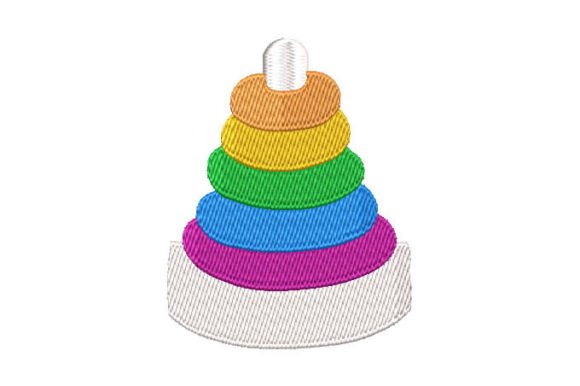
As an embroidery designer who’s prepped over 200 craft fair booths, my gut reaction to Didactic Game Tower is immediate: it’s clever, approachable, and quietly confident. The name hints at education—but not in a stern, chalkboard way. It leans into playful learning, with “Tower” suggesting structure, stacking, and tactile fun. Visually, I imagine soft outlines, balanced negative space, and just enough detail to feel intentional—not fussy. It reads as whimsical modern, not rustic or vintage—making it ideal for makers who want to stand out without shouting.
Where It Shines on Craft Fair Products
This machine embroidery design thrives where personality meets utility—and that’s exactly what sells at handmade markets.
- Tote bag design: Centered on a natural canvas tote, Didactic Game Tower becomes a conversation starter. Its scale works beautifully at 4–5 inches wide—large enough to read from three feet away, small enough to avoid overwhelming the fabric.
- Apron embroidery: Positioned above the pocket or centered on the bib, it adds instant charm without competing with stains or splatters. The “school” theme resonates with teachers, homeschoolers, and creative educators browsing your booth.
- Tea towel embroidery: A standout on linen or cotton towels—especially when paired with coordinating thread colors (think sage green, warm mustard, or soft navy). The design’s clean lines hold up beautifully against textured weaves.
- Embroidered patch: Perfect for iron-on or sew-on application. At 2.5–3 inches, it retains legibility and visual impact—ideal for denim jackets, backpacks, or kids’ lunchboxes.
- Pillow cover & pouch embroidery: Works equally well as a focal point (centered front) or subtle accent (lower corner). Its balanced composition avoids looking top-heavy or lopsided—a common pitfall with tower-shaped motifs.
What Holds Up Online—and What Doesn’t
For Etsy sellers and digital embroidery file shops, Didactic Game Tower performs strongly in listings—but only if you show it *in context*. A plain JPEG of the design alone won’t convert. Instead, pair it with a printable mockup of a tea towel draped over a wooden counter, or a stitched patch on a denim pouch. Customers buy the feeling—not the file.
The design photographs cleanly: no excessive fill stitches to cause glare, no ultra-thin lines that vanish in shadows. That means less editing, faster listing turnaround, and more consistent thumbnails across devices. As a small shop product, it scales well across multiple SKUs—same design, different formats—keeping your branding cohesive without exhausting your creative bandwidth.
Production Reality Check
Before stitching your first batch, treat Didactic Game Tower like any new embroidery file: test it. Not just once—on three fabrics: light cotton (for patches), medium-weight linen (for towels), and stable twill (for caps). Why? Because stitch density matters more than aesthetics when you’re stitching 30+ units before Saturday morning.
Watch for tight curves or overlapping elements—if the original file packs too much detail into a narrow footprint, tiny letters or stacked blocks may blur on textured towels or thick stabilizer. Likewise, avoid placing it directly over seams or curved cap surfaces unless you’ve confirmed hoop size compatibility and digitizing flexibility.
On dark fabric? Confirm thread colors contrast clearly—especially if “tower” includes fine outlines or internal details. And if your version includes lettering, verify readability at 2 inches wide. If it vanishes, resize or simplify before production.
Booth Impact & Buyer Engagement
At a crowded craft fair, Didactic Game Tower earns attention without competing with louder, busier designs. It’s the quiet one that gets picked up, turned over, and admired. Buyers linger longer when they recognize both meaning and craftsmanship—and this design delivers both: a nod to lifelong learning, rendered with clean, confident stitches.
It strengthens your booth narrative. Pair it with other school-themed or educational handmade products (like ABC dish towels or math-themed coasters), and suddenly your table tells a story—not just a collection of items. That consistency builds trust with repeat buyers and encourages bundle purchases (e.g., matching towel + pouch + patch set).
Most importantly, it feels handmade—not mass-produced. Even when stitched by machine, the whimsy in the shape and balance says “designed with care.” That perception lifts perceived value, supports premium pricing, and makes your finished product feel giftable, not generic.
Designer Notes You Can’t Skip
Before cutting fabric or loading hoops:
- Test the embroidery file on scrap fabric—same type and weight you’ll use for production.
- Check thread contrast on both light and dark backgrounds. Adjust thread colors if needed.
- Review spacing between elements—tight clusters can shift or pucker without proper stabilizer.
- Confirm hoop size fits your intended product layout (e.g., a tall tower may need a 5x7 hoop minimum).
- Inspect stitch density—dense fills trap moisture on towels; lighter fills breathe better.
- Match stabilizer to fabric texture: cutaway for knits, tear-away for stable wovens, fusible for patches.
- Create at least one real mockup—not just digital. See how it drapes, folds, and catches light.
- Compare thread colors across fabric swatches. Dye lots vary; test before bulk ordering.
- Verify commercial licensing. This is a school-themed embroidery design—confirm you’re cleared to sell finished products, not just the digital embroidery file.
Final Thought: A Smart Addition to Your Design Assets
Didactic Game Tower isn’t just another machine embroidery design—it’s a versatile, mood-lifting asset for creative entrepreneurs who value clarity, charm, and craft. It bridges classroom nostalgia with contemporary handmade appeal, fitting seamlessly into aprons, totes, towels, and gifts. When executed well—with attention to fabric, stabilizer, and scale—it elevates your entire booth. For Etsy sellers, boutique makers, and craft fair veterans alike, it’s a low-risk, high-return addition to your design assets. Just remember: its strength lies not in complexity, but in considered simplicity. Stitch it right—and watch it become a quiet bestseller.