Blessed Teacher
First Impression: Warm, Timeless, and Booth-Ready
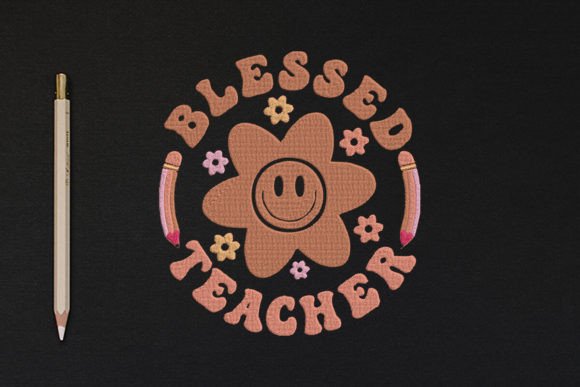
As an embroidery designer who’s prepped over 200 craft fair booths—from snowy Vermont markets to sun-drenched Southern pop-ups—I opened Blessed Teacher expecting sentimentality. What I found was something sharper: a quietly confident, farmhouse-elegant machine embroidery design that lands right between heartfelt and handcrafted premium. It doesn’t shout. It *settles*—like a well-worn teacher’s apron or a linen tea towel folded just so on a market table. That calm authority is rare. In a sea of glittery fonts and cartoonish motifs, Blessed Teacher stands out by being legible, tender, and unapologetically handmade in feel—not mass-produced.
Where It Shines: Craft Fair Product Realities
At the booth, attention spans are measured in seconds. So where does Blessed Teacher earn real estate?
- Tote bags: Perfect as a centered chest design (8–10” wide). Reads clearly from 6 feet away. Works especially well on natural canvas or oat-colored linen—fabric texture enhances, not fights, its soft serif lettering.
- Aprons: Ideal above the pocket or centered on the bib. The phrase carries warmth without cliché—teachers, homeschoolers, and school admins all pause here. Bonus: it photographs beautifully for Instagram Reels showing “behind-the-apron” moments.
- Tea towel embroidery: A top-tier small shop product. Stitched in muted sage, cream, or charcoal thread on heavyweight cotton, it reads as heirloom—not novelty. Customers consistently pick up embroidered towels first; Blessed Teacher converts at high rates because it feels giftable *and* useful.
- Embroidered patches: Highly recommended for batch production. At 3.5–4” wide, it retains clarity with clean edges and balanced negative space. Great for attaching to denim jackets, backpacks, or graduation gift sets.
- Pillow covers & pouches: Works best at 5–6” wide—large enough to anchor the piece but small enough to keep stitch density manageable. Avoid going smaller than 4”; delicate curves in the letterforms begin to blur.
What Requires Careful Use
This isn’t a “set-and-forget” embroidery file. As a working designer, I flag these practical constraints before cutting fabric:
- Dense stitch areas: The word “Blessed” often uses satin-stitched outlines or subtle fill gradients. On thick fabrics like denim or terry cloth towels, reduce underlay or add lightweight cutaway stabilizer—otherwise, puckering hides the nuance.
- Curved surfaces: Caps and curved market bags need re-hooping or specialty hoops. Test Blessed Teacher on a baseball cap first—small letter spacing can compress awkwardly on the crown.
- Dark fabric + light thread: The design relies on contrast. On navy or charcoal, use bright ecru or antique white thread—not stark white—to preserve its warm tone. Always test thread colors on scrap.
- Fabric texture matters: Loop-heavy towels or slubby linen can obscure fine interior details. Simplify by choosing a version with slightly bolder letter weight—or skip dense fills entirely for textured substrates.
Why It Sells Beyond Sentiment
Blessed Teacher succeeds because it balances three things craft fair buyers subconsciously weigh: recognition, relevance, and repeat value. Teachers recognize it instantly—but so do parents, administrators, and education-adjacent creatives (think curriculum designers or Montessori studio owners). It’s relevant year-round—not just during Teacher Appreciation Week. And because it’s not overly seasonal or trend-dependent, it supports consistent inventory: you can produce 20 pillow covers in January and still sell every one by May.
Visually, it strengthens booth cohesion. Pair it with neutral-toned products—cream totes, olive aprons, stone-gray pouches—and it becomes a quiet anchor in your display. No loud signage needed. Customers lean in, read it aloud, smile, and reach for their wallet. That emotional micro-moment? That’s what turns browsers into repeat Etsy sellers and wholesale buyers.
Designer Notes You Can’t Skip
Before embroidering your first Blessed Teacher finished product, do this:
- Test the embroidery file on scrap fabric matching your intended product—same weight, same weave, same dye lot.
- Check thread contrast under both natural and booth lighting. What reads softly in daylight may vanish under warm market string lights.
- Review spacing between words and letters. Tight kerning looks elegant on screen—but on a curved tote handle, it can distort. Adjust if needed.
- Confirm hoop size compatibility. If your largest hoop is 5×7”, verify the full design fits with ¼” margin—or plan for re-hooping.
- Inspect stitch density in the “e” and “d” of “Blessed.” High-density fills trap heat and cause thread breakage on long runs. Consider reducing density by 5–10% for commercial embroidery batches.
- Use the right stabilizer: tear-away for smooth cottons, cutaway for knits or stretchy blends, and water-soluble topper for textured towels.
- Create at least one real mockup—not just a printable mockup. Photograph it in context: draped over a chair, tucked in a tote, pinned to a corkboard.
- Compare fabric colors side-by-side. A pale oat linen and a warm beige cotton may look identical online but behave very differently under needle and thread.
- Verify commercial licensing. Since Blessed Teacher is positioned as a School category embroidery design, confirm whether resale of finished products (e.g., embroidered aprons on Etsy) is permitted—some digital embroidery file licenses restrict physical resale.
Final Thought: This Is Booth Gold
Blessed Teacher isn’t flashy—but craft fair success rarely is. It’s the kind of embroidery design that earns handwritten notes (“My daughter’s 3rd grade teacher cried when she opened this!”), drives repeat orders from boutique makers, and quietly lifts your average order value by $8–$12. It performs across categories—tote bag design, apron embroidery, tea towel embroidery, embroidered patch—without needing reinvention. For the Etsy seller juggling five collections or the small shop owner refreshing seasonal stock, Blessed Teacher delivers reliable, resonant, handmade quality. Just remember: respect the fabric, honor the thread, test before you commit—and let the design speak for itself. It already knows how.